Showing posts with label Vayus. Show all posts

Monday, March 14, 2011

Dealing With It

Writing about samana vayu last week got me thinking about the way we process our experiences and how much influence that has over our future experiences. What aids us in really dealing with the events of our lives and if we are unable to properly and clearly deal with what is happening in our lives, how will we continue to move forward making good choices for ourselves? If we can't get some clarity and perspective on the now, how can we expect to fully enjoy and appreciate our future?

Heavy stuff, I know. 

Whether a short conversation with an acquaintance or a life-altering occurrence, it all has to be dealt with and dealt with honestly if we hope to healthily assimilate the experience and continue feeling balanced. That's a long winded way of saying we have to deal with our lives to remain healthy.

Catching up with an old friend can be a great way to excite samana

There are many ways to encourage samana vayu. Obviously asana practice can work to encourage this assimilation and balance (here is a good practice to aid samana), but there are many other ways to excite this process. Writing, meditation, baths, talking to a good friend, etc... whatever helps create that mental space and openness to work through our days is beneficial to us in the long run. Often we don't allow for enough time or freedom from obligations to really think through what we're doing or what is happening in our lives. It's easy to get wrapped up in our routines, but what if we made this time for ourselves a part of those routines? This time will look different for each person, depending on what provides you mental clarity and calm. For some it might be listening to music, drawing, letter-writing, crafting, painting, journaling, walking, dancing, or simply creating a quiet space for yourself a few minutes a day and the list could go on and on.

 Journaling and writing can also encourage balance

Long baths and journaling have always been my go to calming actions. The journaling began when I was a kid, writing about the boy I liked or what happened at school that week and continued to the present, documenting the minutiae and the milestones of my life. I love having a record of my adventures, the boring as well as the life-altering. Maybe it's a fear of forgetting, but the act of committing it all to paper helps me process. As I grew older I discovered the wonderfulness of a nice, long, relaxing bath gave me a similar feeling. I wasn't always writing it all down anymore, but that calm that comes with working through your experiences was the same.

I always feel better and more balanced having giving myself some time to just relax and think. That quiet and mental calm is invaluable and I notice that I begin to feel a bit off or tense when I'm not giving myself that time. We all need to process our lives in whatever form that takes and making the time is the first step.

Once you know what works for you, make it a priority for yourself. It's so important that you give yourself this time and space. Do something that you really enjoy and in the process help create balance within yourself. Have fun with it and enjoy the relaxation and calm!
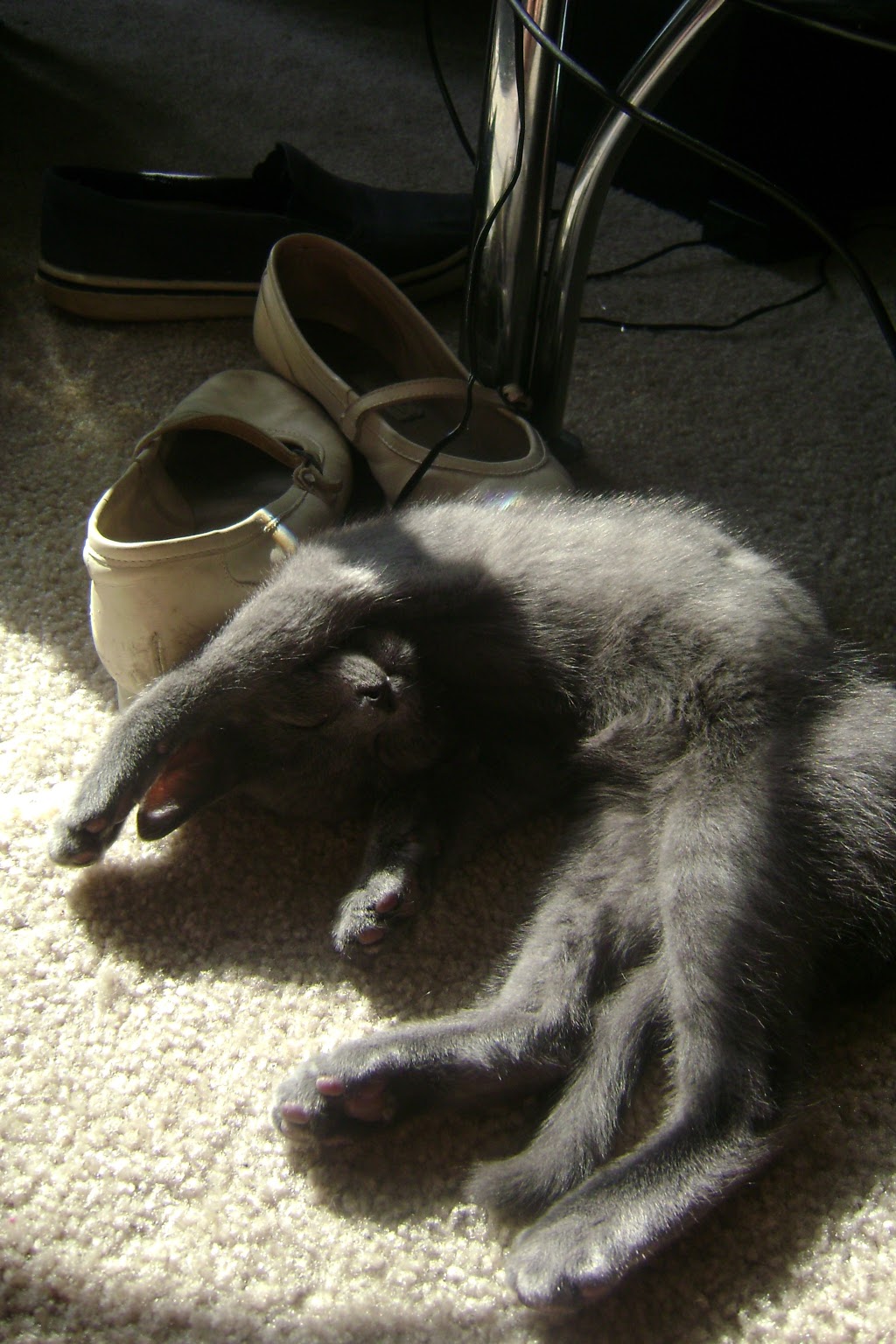
 Take a tip from this guy- our cat Louis, 2008

Namaste!
Tara

Wednesday, March 2, 2011

The 5 Vayus: Samana Vayu (3 of 5)

As written about previously, the yoga tradition describes five distinct channels in which prana (vital life force energy) is distributed throughout our bodies known as the vayus (literally “winds”)—prana vayu (not to be confused with the master prana), apana vayu, samana vayu, udana vayu, and vyana vayu. These five vayus govern different areas of the body as well as different physical activities and more subtle aspects of the self. When functioning harmoniously, they aid the health and strength of the body and mind.

Samana Vayu

As prana and apana vayu govern what we consume and release respectively, samana vayu controls assimilation. Samana Vayu, also known as "the middle breath", is active at the navel center (manipura chakra), halfway between prana vayu in the chest and apana vayu in the pelvis. 

Samana vayu is a  force of unity and absorption. It functions to assimilate all forms of prana, gathering and processing all of our experiences. This vayu is the middle ground between what we take in and what we put out. As well as aiding in physical digestion, it is also the pitstop in which we deal with the events of our lives, incorporating and relinquishing what we wish.  
If prana vayu governs our experiences and apana our reaction to those experiences, samana vayu is where we processed what happened. 

As the core of pranic energy the navel center is essential to yoga, uniting opposing (upward and downward moving) forces through asana (postures). Bringing these forces together strengthens the body and balances the mind.


When samana is healthy and balanced, we benefit from strong digestion and mental clarity. Once we are able to honestly process our experiences, we are able to more fully enjoy our lives. When samana is compromised, we may have difficulty assimilating and digesting physically as well as emotionally.


Asana for Samana Vayu via Yoga International 
 
Since the energy at your navel center has the potential to be powerfully transformative, focusing your asana work here will benefit all aspects of your spiritual practice. Forward bends, twists, abdominal strengtheners, and many advanced practices like agni sara, nauli kriya, and yoga mudra are particularly effective in working with samana vayu, but we can access samana in virtually any classical asana. In the selection of postures below, we’ll see how to direct the flow of apana and prana to the navel center in standing poses, stoke samana with twisting poses, strengthen the structural support for this region in a backbend, and activate samana in a seated forward bend. (These postures are meant to be practiced within a balanced overall asana sequence.)

1. Parivritta parshvakonasana (revolved side angle pose)


This standing twist strongly cleanses and nourishes the organs of the abdomen while balancing energy in the pelvis and lower spine. Stand with the feet hip-width apart and step the left foot straight back about three to four feet. Bend the right knee and place both hands on the thigh to assist a twist to the right. As you twist, keep the spine long and adjust your stance as needed to keep the left foot flat on the floor. Press the left upper arm or elbow on the right thigh, stacking the shoulders and pressing the hands together to lift the left ribs up off the leg, drawing the rib cage away from the pelvis and giving the belly room to twist. Focus the twist in the gut; you should feel a deep squeezing and wringing out of the organs in the abdomen. If you are feeling the pose in the muscles of the hip and pelvis, you may need to back off and take a less deep overall twist to localize the work in the navel center. Try lifting the back heel, dropping the back knee to the floor, or stepping your back foot closer to the left edge of your mat to give the belly more room.

Pay attention to the breath; the movement of the diaphragm down into the belly on the inhalation accentuates the effect of the pose, and the exhalation allows you to twist a little more deeply. Coupled with attention to the breath, the strong twist in the abdomen helps to wake up and activate the navel center. When you’re finished, untwist slowly with an inhalation, step the back foot to the front of the mat, and repeat on the other side.

2. Utkatasana (chair pose)


Now we’ll work with energy flow at a more subtle level in utkatasana, redirecting the flow of apana and prana vayus toward the navel center. Start with the feet parallel, either together or a few inches apart. Bend the knees and drop your weight down into the feet, simultaneously stretching upward through the arms, the crown of the head, and the length of the spine. Press the feet evenly into the floor and away from each other. Reach the tailbone toward the floor to keep the lumbar spine in neutral alignment—neither arched nor flattened. Draw the upper arms toward the sides of the head, keeping the shoulders down, the elbows straight, the collarbones wide, and the neck long. Let the outer body drop, and strike a working balance between the forward lean, to balance the deep squat, and the upward lift of the torso, to resist the forward lean.

The dropping of the weight and drawing down of the breath brings prana from its realm in the chest down to the navel center. The inner lift from the pelvic floor draws apana from its pelvic realm up into the navel center. The meeting of the two creates samana, which you may feel as heat at the navel center spreading through the whole body. Release and stand quietly for a moment, following the flow of breath in the body and feeling inner expansiveness and alertness.

3. Jathara parivartanasana (reclining abdominal twist)


As the name implies, jathara parivartanasana is one of the best asanas for stoking jathara agni, the fire in the digestive system. This pose also tones the navel center and activates samana. The combination of a leg lift with a twist strongly energizes and strengthens the entire region, including all four layers of the abdominal muscles; stimulates the nervous system; and cleanses and nourishes the abdominal organs.

Start on your back with the knees bent and the thighs over the abdomen. Press the arms into the floor at shoulder height to stabilize the torso. Exhale, gently lowering the knees to one side. Before reaching the floor, inhale the knees back to center and then exhale and lower to the other side. Inhale back to center. Lower the knees only as far as flexibility and strength allow.

If this is easy, straighten the legs toward the ceiling, and exhale, slowly lowering the feet toward the right hand, as you press the left shoulder into the floor. Inhale, lifting the legs smoothly back to center. Repeat to the left side. Continue from side to side.

You can also hold the twist while maintaining abdominal engagement. First bend your knees and plant the feet flat on the floor to lift and shift the hips to the left. Then straighten the legs and slowly lower to the right until the feet are just off the floor or at the lowest point where you can still effortlessly maintain control of the alignment in the spine. Hold the pose for a few breaths, then repeat on the other side.

4. Navasana (boat pose)


Sometimes referred to as shalabhasana (locust pose), this backbend stretches the abdominal muscles, strengthens the lumbar spine, and supports the energy of the navel center. In this sequence it serves as a counterpose to gently move energy from the navel through the rest of the body and restore balance in the musculature.

Lie face down with the arms alongside the head, or alongside the body if you have shoulder issues. Draw the legs together, reach out through the feet, press the pelvis into the floor, and lift the legs, chest, and arms on an inhalation. Breathe with your focus at the navel center pressing into the floor. Keep the arms and legs moving toward the central axis of the body while stretching away from the navel center in both directions. Hold for several breaths and feel the energy build and fill the body. Relax down on an exhalation.

5. Marichyasana (Sage Marichi pose, twist variation)


This seated twist strongly activates samana and concentrates and absorbs awareness deep into the core of the body. Fold the left heel into the lower right abdomen in half lotus (ardha padmasana). If the knee doesn’t reach the floor, or if there is discomfort in the joint, straighten the left leg on the floor instead. Bend the right knee and bring the foot flat on the floor in front of the right sit bone. Twist to the right, initiating the movement deep in the low belly.

Several arm variations are possible. The bound version of this twist compresses the energy of the navel center and stabilizes the posture by locking it in place. To bind, wrap the left arm around the outside of the right thigh and the right arm behind the waist, then clasp the hands. If this is challenging, place the right hand on the floor behind the pelvis and either wrap the left arm around the right knee, or brace the upper arm against the outer right thigh.

Focus on the navel center and the breath as you relax and hold the deep compression without exertion. Allow the mind to become absorbed in the concentrated field of samana at the navel center. Release slowly on an inhalation, rest for a breath or two, and then do the pose on the other side.

6. Paschimottanasana (posterior stretch)


Paschimottanasana is the quintessential forward bend with a long list of benefits, including perfect digestion and the awakening of kundalini, according to the Hatha Yoga Pradipika. Tight hamstrings or a stiff lower back will hamper access to the navel center, so consider bending your knees and/or sitting on a cushion or a folded blanket if either of these problems take your attention and energetic focus away from the navel center. Draw the lower belly in and up, and hinge forward from the hip joints. Roll the inner thighs downward to keep the legs aligned, and reach gently through the heels, even if the knees are bent. Keep the lower belly engaged without restricting the easy flow of the breath. If you are deeply engaged in the core of the body, you can soften the outer body and surrender into the pose. The lower belly activation moves apana up, while the alignment of the pose, the breath, and the mental focus at the pelvis move prana down to the navel. When perfected, paschimottanasana brings about the union of apana and prana, and the awakening of sushumna, which you may experience as a drawing inward of the mind and a sense of integrated inner space extending from the pelvis to the head.


Namaste!
Tara


Monday, February 21, 2011

The 5 Vayus: Apana Vayu (2 of 5)

As written about previously, the yoga tradition describes five distinct channels in which prana (vital life force energy) is distributed throughout our bodies known as the vayus (literally “winds”)—prana vayu (not to be confused with the master prana), apana vayu, samana vayu, udana vayu, and vyana vayu. These five vayus govern different areas of the body as well as different physical activities and more subtle aspects of the self. When functioning harmoniously, they aid the health and strength of the body and mind.


Apana Vayu


While prana vayu governs what we consume and take in, apana vayu governs what we release. Apana, which is most active in the pelvis and lower abdomen, governs the eliminative functions (excretion, urination, menstruation) and the downward and outward flow of energy in the body.

Apana vayu not only deals with physical waste and release, but also emotional.  When we let go of unwanted emotions or purge ourselves of negativity in any form we are engaging apana vayu. Apana is what allows us to liberate ourselves from that which can be destructive and redirect our energy towards building a strong inner foundation. When apana vayu is active and balanced we are grounded, resilient, and less likely to suffer from illness.


When apana is weak we may be more susceptible to illness, insecurity, self-doubt and a loss of purpose. 


Asana for Apana Vayu via Yoga International


With a little practice and awareness, almost all of the classical asanas can be done in a way that provides access to apana vayu; indeed, mobilizing apana in the pelvis and then redistributing it is one of the main goals of asana work. This engagement of apana is the intention behind mula bandha, the root lock—a practice which is often misunderstood as a clenching of the sphincters of the pelvic floor, but which, when properly activated, can awaken and enliven asana. Initially, you can in fact approach mula bandha by contracting the muscles of the pelvic floor between the pubis and the tailbone (including both the urogenital and the anal sphincters). But in order to work with apana effectively in asana, you will need to engage a subtler, more complex aspect of mula bandha. On the muscular level, this means initiating and activating each pose from deep within the lower belly; this way you stabilize at the root without clenching, and ease the flow of apana into the structure of the pose. (It is important to note that, traditionally, mula bandha is discouraged during menstruation—if you succeed in catching hold of apana at that time, you may inhibit or even stop the flow of menses.)

The following selection of poses explores how apana vayu can be activated across several classes of asana and various pelvic alignments. Standing poses use the activation in the legs to energetically integrate the pelvis with the torso and the extremities, rooting us deeper into the pose and directing apana into the architecture of the asana. Sitting postures, which are intrinsically stabilizing, provide an ideal opportunity to strongly engage apana. In twists and forward- and backward-bending poses, the activation of apana anchors the body and allows for a smooth flow of energy from the root up through the spine.

In the poses below, focus on the position of the pelvis, the engagement of the lower belly, and the activation of the legs. With even, full breathing and relaxed but conscious engagement, you can harness the powerful force of apana to effortlessly stabilize and energize your postures.
 
 
1. Prasarita padottanasana
 (spread-legged standing forward bend)


Notice how the pelvis is inverted here, drawing attention to the lower belly and pelvic floor. To start, step your feet wide apart with the toes pointed inward slightly (the feet should be close enough to feel stable in the pose). Keep your weight evenly spread across the sole of each foot and fold forward from the hip creases. Use your feet to help awaken the pelvic floor and apana vayu: Ground the big toes, lift the arches, and bend the knees slightly. Then press the feet down and away from each other, as if you were pulling the mat apart, or if you ski, executing a snowplow. Lift the sit bones and draw the pubic bones back between the inner thighs; then lift the pelvic floor and contract and hollow out the lower belly. Allow this energetic activation to draw you deeper into the pose.

2. Vrikshasana
 (tree pose)


The legs and sacrum work together to stabilize this pose and awaken and redirect apana. Start with both feet parallel under the hip joints and evenly pressed into the floor. Rotate one thigh open and bring the foot to the top of the groin (or inner thigh if half lotus is hard on your knees). Hold the pose in place by staying engaged through the lower belly, the muscles around the sacrum, and the inner thigh of the standing leg. Draw up through the standing foot, press the bent knee back, and draw the tailbone toward the floor. (If you have the foot to the inner thigh, press the thigh against the foot to lift up off the standing leg.) Then draw up through the front of the spine as well as the center of the chest, throat, and head. Keep your focus on the engagement in the lower belly and refine the breath, softening in the lower rib cage and the back of the waist. With this engagement of apana, you’ll feel taller and stiller in the pose.


3. Ardha padma janu shirshasana
 (bound half lotus head-to-knee pose)


This seated forward bend combines elements of both the standing poses just described. In the bound version, the heel presses deep into the lower belly as you fold forward. Start sitting up straight with the legs directly in front of you. Use a prop and/or bend the knees if needed to bring the pelvis into a neutral position. Rotate one thigh open, bringing the foot to either the inner thigh or the top of the groin. If your leg is in half lotus position, wrap the arm on the same side behind the waist and catch the toes if they are available; otherwise leave the hand on the floor beside the thigh. Press the bent knee down, then hinge the pelvis forward from the hip joints and draw the pubic bones down and back. To deepen the connection with apana, exhale and engage the lower belly and pelvic floor; inhale by expanding the upper belly only. The contraction just above the pubic bone deep in the abdomen provides a platform and support for the breath. The flywheel of the breath, in turn, generates energy in the body and absorbs and contains this energy at a deeper level.

4. Baddha konasana
(bound angle pose)


The inner thighs, lower back, and pelvic floor are intimately related to, and governed by, apana. Because bound angle pose activates these regions, it is one of the most powerful postures for awakening and directing apana. To begin, sit with the pelvis in a neutral position; if necessary, sit on the edge of a folded blanket to maintain the natural curve in the lower back. Then press the knees down and feel the pelvic floor lift. Tilt forward, reaching the pubic bones down and back and lengthening the lumbar spine. Continue drawing forward from the lower belly; activate the inner thighs to bring the thighs down and out away from the pelvis. Then draw the shoulder blades toward the waist and soften the jaw and the eyes. Breathe easily without releasing the action of the pose, and notice the energetic connection between the pelvic floor, the entire length of the spine, and the crown of the head.

5. Shalabhasana
(locust pose)


With strong energetic and muscular engagement in the pelvis, shalabhasana powerfully activates apana and strengthens the whole backside of the pelvis, legs, and lumbar spine. You may need to start with one leg at a time to build strength; keep the pelvis on the floor in the single-leg version. For full locust, position your arms straight on the floor under the body so that you have maximum leverage to lift the pelvis up off the floor: interlace the fingers, or rest the upper thighs or groin on the little-finger side of your fists; if the elbows feel strained, try a different hand position. Consciously draw the pelvic floor in and up. Press the arms and the chest down and lift the legs and pelvis away from the floor. Keep reaching the legs back and up, and engage the inner thighs to secure the femurs in the center of the hip sockets. After releasing the pose, rest with your head to one side and notice the energy circulating from the pelvis through the whole body.


Namaste.
Tara

Tuesday, February 8, 2011

The 5 Vayus: Prana Vayu (1 of 5)

As written about previously, the yoga tradition describes five distinct channels in which prana (vital life force energy) is distributed throughout our bodies known as the vayus (literally “winds”)—prana vayu (not to be confused with the master prana), apana vayu, samana vayu, udana vayu, and vyana vayu. These five vayus govern different areas of the body as well as different physical activities and more subtle aspects of the self. When functioning harmoniously, they aid the health and strength of the body and mind.

Prana Vayu 

Prana vayu is the fundamental energizing force inside of each of us. It governs all that comes into us, from air and food to ideas or perceptions, such as how a certain song makes us feel or what kind of impression we get after meeting someone for the first time. As it works with respiration and reception, prana is most active in the region of the lungs and heart. It provides motivating energy and vitality. 

The prana vayu is what spurs us to be adventurous and to allow us to be more open to what is around us as well as within us, aiding in heightened sensitivity to external forces and inner awareness. It allows us to see the world in all of it's amazing glory while anchoring our inner focus and calm.


However, if prana vayu is out of balance we may suffer from cravings, fall prey to bad habits, and wrestle with a restless mind.

---

Asana for Prana Vayu via Yoga International

The following mini-sequence supports the intake of prana vayu and helps maximize the effectiveness of pranayama by creating strength, alignment, and activation through the upper body. You’ll benefit most from this sequence when preceding it with standing poses and seated forward bends, and following it with twists, inverted poses, and a systematic relaxation.

1. Parivritta janu shirshasana
(revolved head-to-knee pose)


Sit with the spine straight and the legs spread wide apart. Fold the right foot into the inner left groin. Wrap the right arm behind the waist and fold to the left from the left hip crease, keeping the spine neutral and looking straight ahead. Press the left forearm or hand onto the left leg or onto the floor beside the leg. Firm the lower belly to stabilize the lumbar spine, and roll the sternum toward the sky, keeping the shoulder blades drawn down and the collarbones wide. Then stretch the right arm up and alongside the ear, turning the chin over the shoulder. Draw the right sit bone down and feel the stretch along the right side of the body. Breathe into this opening, taking care not to collapse on the left side, and pressing the left leg into the floor to support the pose. Hold, keeping your attention on the fullness and ease of breath, and lift gently out of the pose when the opening feels complete. Repeat on the other side.

2. Adho mukha shvanasana
(downward-facing dog pose)


Cross your legs, lean forward into your hands, and lift the pelvis as you straighten the arms and legs into downward-facing dog. Press the hands strongly into the floor to lift the sit bones. Keep the heels up or the knees bent if the back of the legs are tight, so you can lengthen the line from the sit bones through the center of the hands.  Broaden the tops of the shoulders and collarbones as you push the floor away.

3. Downward-facing plank pose


From downward-facing dog, press up onto the balls of the feet, shift your weight forward over the shoulders as you lift your chest between your arms, and lower the pelvis in line with the chest. Press the palms evenly into the floor, and activate the shoulders by rotating the forearms inward and the upper arms outward. Flatten the shoulder blades against the back as you draw them away from the ears. Reach back through the inner edges of the heels and draw both the lower abdomen and the sacrum deeper into the body to stabilize the pelvis in a neutral position. Hold with steady even breathing for 5 or more breaths, then lower down to the floor.

4. Urdhva mukha shvanasana
(upward-facing dog pose)


Stretch the legs back and press the tops of the feet into the floor. Place the palms on the floor and straighten the arms to lift the chest and pelvis (the hands should now be directly under the shoulders). Draw the chest forward and up, and reach the legs back to anchor the pelvis and support the lower back. Press the hands down as you spin the shoulders back and draw the upper spine toward the front of the body. Keep the back of the neck long as you take the head back slightly. Hold for several breaths, keeping the whole body strongly active, and feel the rib cage expand to the sides, back, and front. Then press back to downward-facing dog or child’s pose and breathe into the back.

5. Gomukhasana
(cow’s face pose)


From your hands and knees, cross the right knee behind the left and sit back on the right heel. (Alternatively, sit between the feet.) Wrap the right arm behind the waist and draw the right elbow toward the midline with the left hand. Then stretch the left arm overhead, bend the elbow, and clasp the right hand. If the hands don’t reach, either draw the right elbow toward the spine with the left hand, or draw the left arm back with the right hand. Firm the legs, draw the lower abdomen in, keep the spine neutral, and look straight ahead as you focus on the breath in the lower ribs for 5 to 10 breaths. Repeat on the other side.


---

As recommended above, I typically do this sequence after a few simple standing poses, following with seated twists, and ending with relaxation. Focusing on the upper body this sequence can easily help you open up prana vayu and all that it has to offer.


Namaste.
Tara

Thursday, January 27, 2011

The 5 Vayus

Ancient yogis through their exploration of the body and breath discovered that prana (life force energy) could be further broken down into components they called Vayus (aka winds). The Prana Vayus are subtle yet distinct channels in which prana is distributed throughout our being. The yogis were able to awaken and cultivate these Vayus by simply bringing their focus and awareness to them. Through this conscious control and direction they were able to create optimal health and well-being (as well as activate the energy to obtain states of enlightenment or Samadhi).
Complete mastery over the Vayus is definitely not necessary to benefit from using them to improve our inward focus and the ability to feel the subtleties within the body. Cultivating a basic awareness of one or more of the Vayus will help us deepen our awareness of body and breath to enrich our yoga practice. A well balanced asana practice will use a range of postures to excite and regulate the Vayus.
The first step in cultivation is identifying the Vayus. Below is a brief description of each.


Prana                
Chest & Head             
Governs breath, energy & creativity
Forward movement
Buoyancy that counteracts apana

Apana               
Pelvis                          
Governs elimination
Downward & outward movement
Grounded force (i.e. gravity)

Samana            
Navel                          
Governs consumption & absorption
"The fire of digestion"

Udana               
Throat                         
Governs speech & expression
Upward movement

Vyana               
Whole body                
Governs circulation on all levels
Connecting us to ourselves and others

Sometimes we find ourselves unable to relax into a pose or release our minds to feel the subtleties in our movements. When you get stuck mentally or physically during your practice it can be helpful to remind yourself of the prana Vayus and the way subtle energy is moving throughout your body.
Throughout the next several weeks I'd like to look more in depth at each Vayu and explore postures that can encourage the movement of prana and help growth within our practices.